About WST

What is WST?

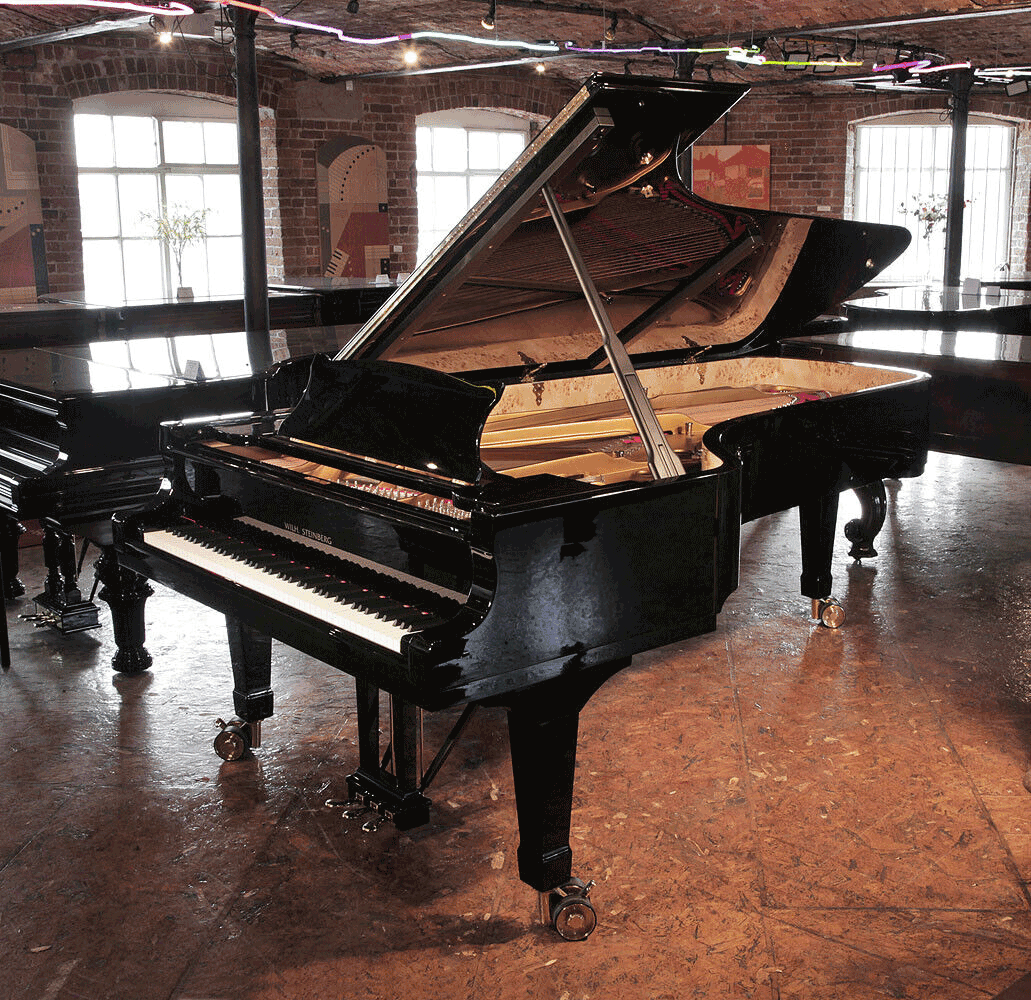
WST stands for Wilh. Steinberg, a name synonymous with exceptional piano craftsmanship. All performances are played on premium Wilh. Steinberg grand pianos, and the competition also features violins, giving young musicians a chance to shine.

About WSTMC

The WST Music Competition provides a stage for young musicians to showcase their talent, gain confidence, and enjoy the experience of performing.

Why We Organize WSTMC

The competition is designed to inspire creativity and musical expression. Our goals are to:

  • Provide a professional stage experience for students.

  • Encourage participants to reach their full potential.

  • Foster a community of music lovers.

  • Celebrate the excellence of Wilh. Steinberg pianos.

  • Support both piano and violin talents.

WST continues to grow each year, welcoming musicians of all levels and nurturing the next generation of talent.

Wilh. Steinberg

Keeping traditional craftsmanship alive and relevant in the modern world

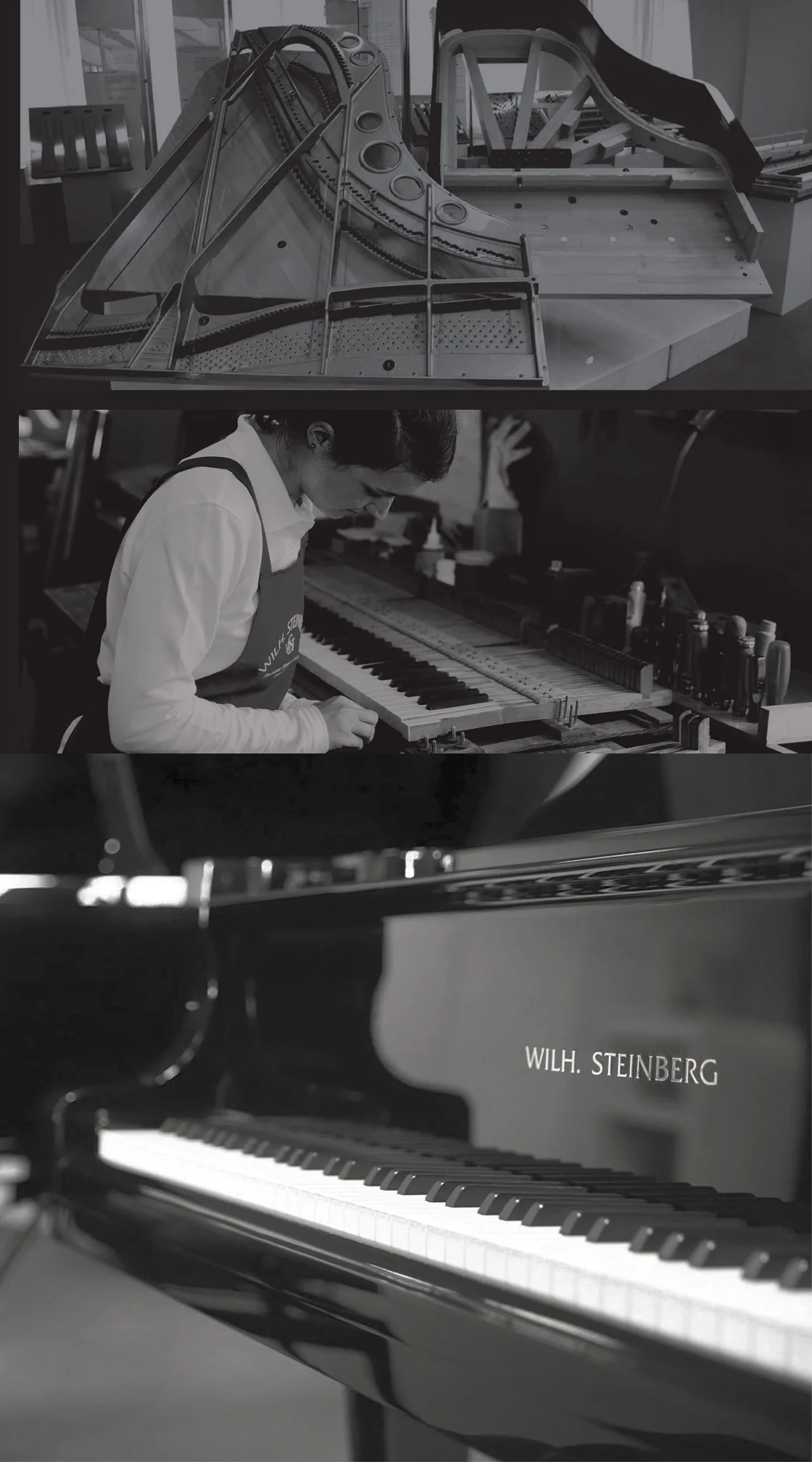
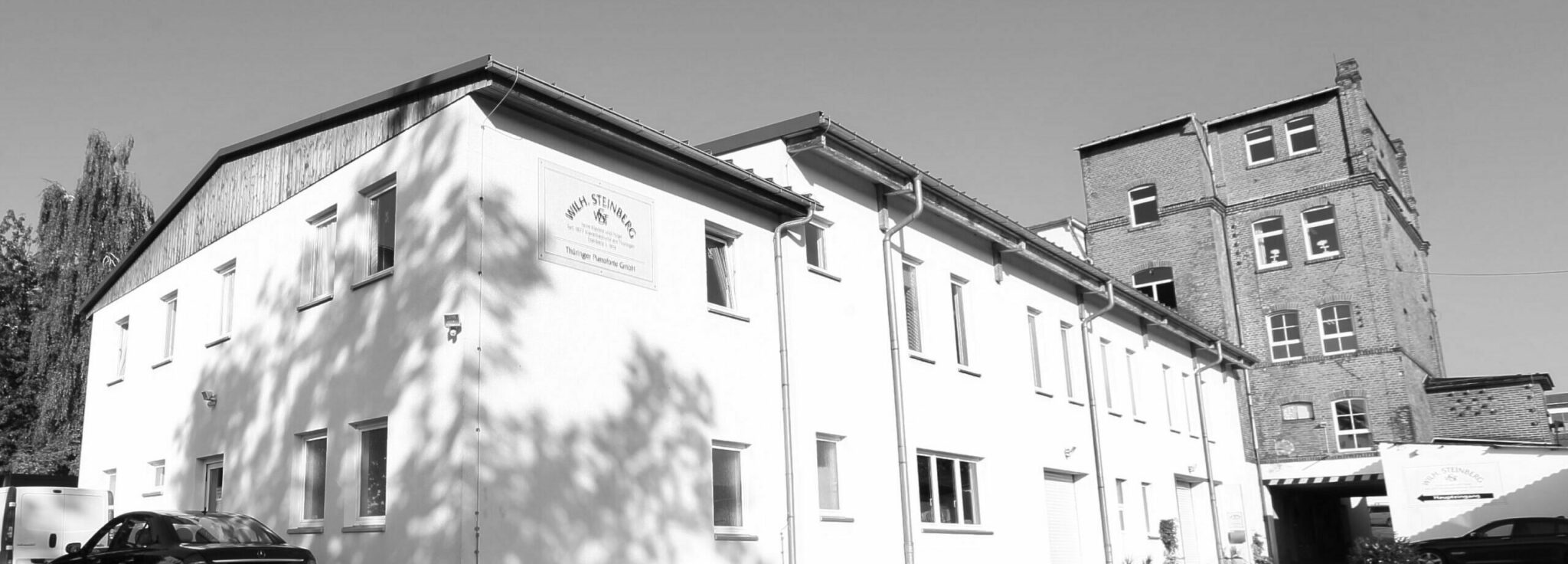
Pianos and grand pianos have been handmade in Eisenberg (Thuringia) since as early as 1877. The WILH. STEINBERG company continues this long piano building tradition at the same location.

OUR HISTORY

WILH.STEINBERG COMPANY
and the origin of legendary German Piano

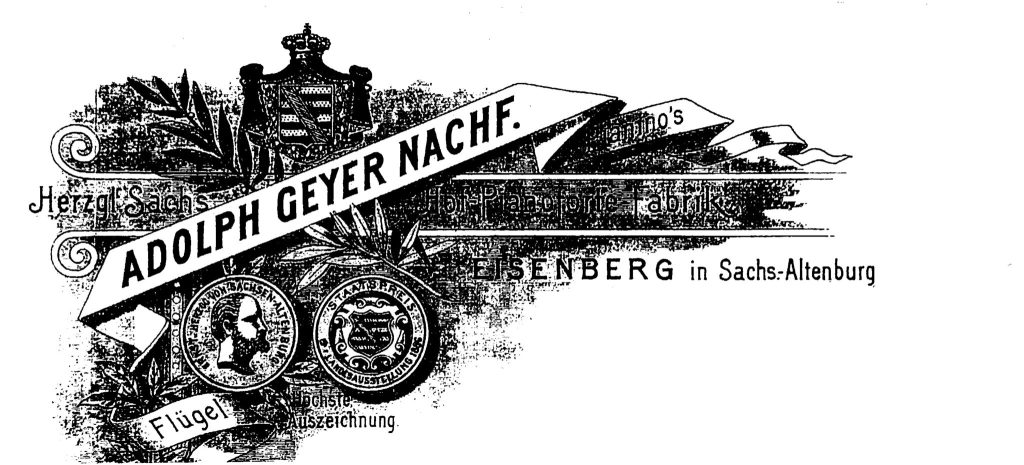
In 1877, Adolph Heinrich Geyer established the very first professional piano factory in Eisenberg. At the beginning of 20th century, Eisenberg was a well-known German City for its own piano making, and was reputed as the origin of modern German piano making. During the World War II, almost all of the piano factories were expropriated, discontinued or destroyed. Fortunately, Geyer family’s piano factory was spared from requisition due to its long history. After the war, government gathered resources from the region and re-constructed the new piano company from the Geyer’s foundation.During the German Democratic Republic era (1949-1990), Geyer’s factory (named as WILH. STEINBERG AG) was nationalized as VEB Pianofortefabrik Eisenberg and grouped with other piano factories as VEB Möbelkombinat Eisenberg. After the re-union of East & West Germany, Eisenberger Pianofortefabrik GmbH (WILH. STEINBERG AG) was re-established. After that, the factory was named after its state of the country – Thüringer Pianoforte GmbH in the year of 1999.

Here you can learn interesting facts about the history of piano manufacturing in Eisenberg (Thuringia)

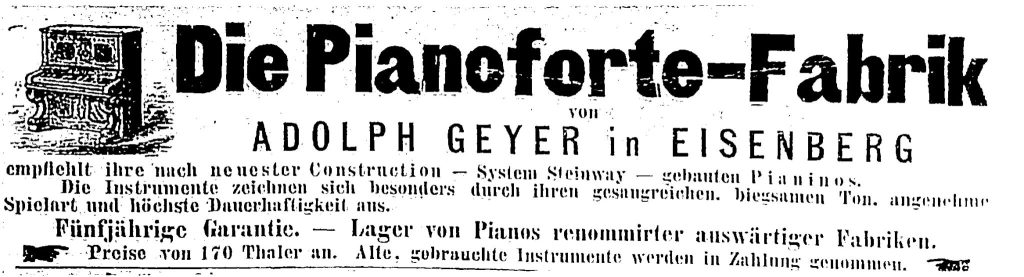
Adolph Geyer – founder and at the same time father of the Eisenberg piano industry was born on 23.11.1846 as the third son of the piano leather manufacturer Eduard Geyer in Eisenberg. He attended school at the former Zenker Institute in Jena. From here, Adolph Geyer was apprenticed to the piano factory of Hoellering & Spangenberg in Zeitz, which was already flourishing at the time, and later expanded his knowledge in several larger German piano factories.

However, in order to achieve greater things and expand his knowledge, Adolf Geyer decided to emigrate to America. He had the opportunity to further his education in piano building in Canada and New York, as well as to gain rich experience. Here he was able to further perfect his knowledge as a constructor and engineer in the field of piano making.

Rich in experience, he returned to his hometown Eisenberg in 1877 and founded his piano factory here on 02.12.1877.

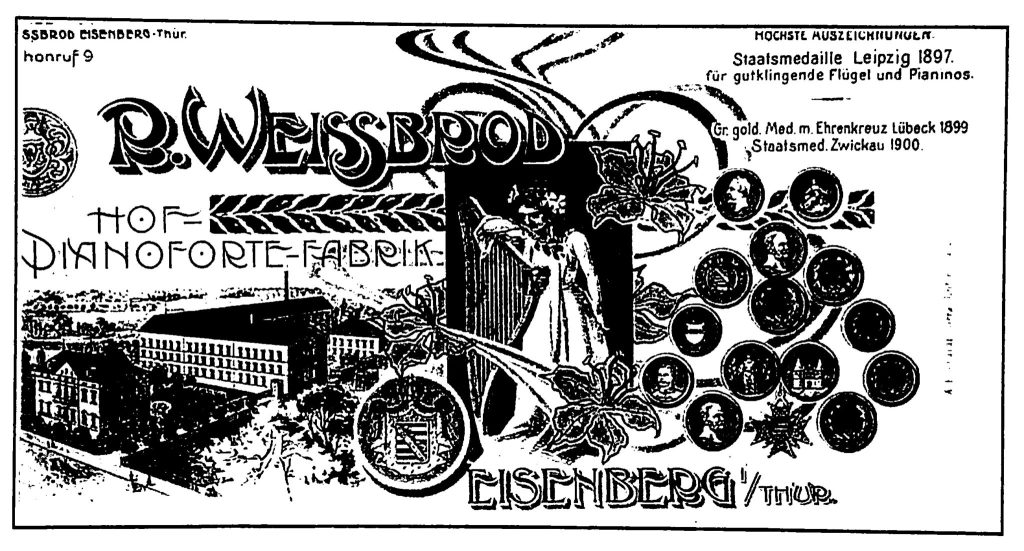
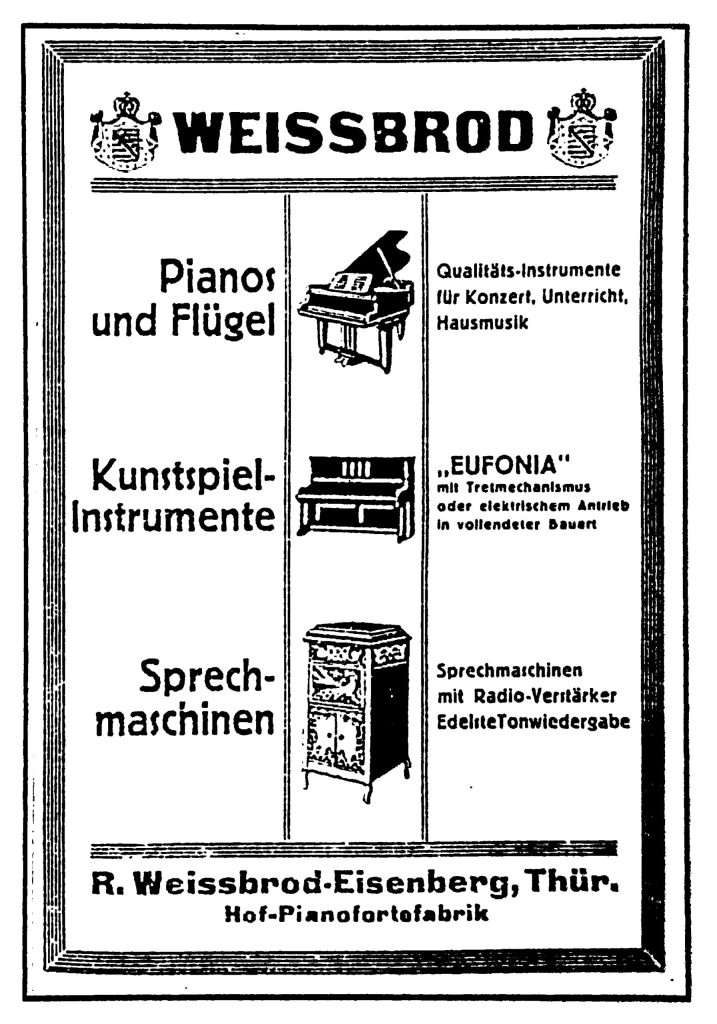
Robert Weissbrod was born on March 16, 1860 in Gerhardtsgereuth in the Schleusingen district. Like his siblings, he had to work in his parents’ small farm, which he did not really enjoy. His thoughts always went in a different direction: His interest was in wood and its treatment and processing. Very soon after his confirmation, he went to Apolda to apprentice with his uncle, who ran a building and furniture carpentry shop.

Later he was placed in Jena in the pianoforte factory of C. Weiding, here he inclined his whole interest to piano building. From Jena, the young Weissbrod went to Leipzig, where he succeeded in finding employment in the large piano factories as a valued assembler.

His ambition to do a good job led Weissbrod to Eisenberg. With the founder of the piano industry there, Adolph Geyer, he soon became a ready piano expert, familiar with the smallest external and internal particles, with the body and soul of the piano.

Robert Weissbrod was animated by the urge for independence. Carried by a rich practical experience and trusting in restless work, Robert Weissbrod, in connection with an employee of the then Geyers factory Mr. August Pape, began on 01.08.1884 with the independent construction of pianos.

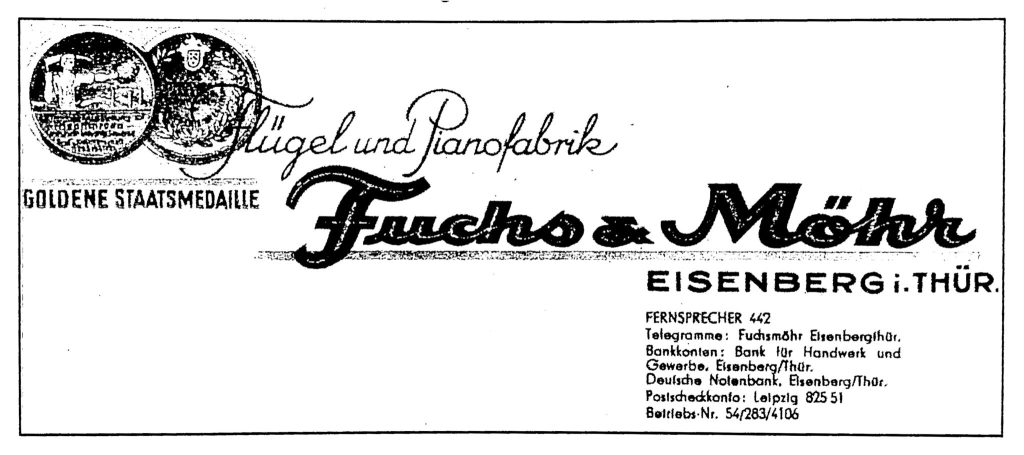
The grand piano and piano factory ,,Fuchs & Möhr“ was founded on 01.01.1921 in Eisenberg (Thuringia). The founders and partners of this company are: Gustav Robert Hermann Fuchs, born 11.02.1871 (foreman in Friedrichstanneck) and Ernst Karl Walter Möhr, born 19.09.1897 (merchant in Eisenberg).

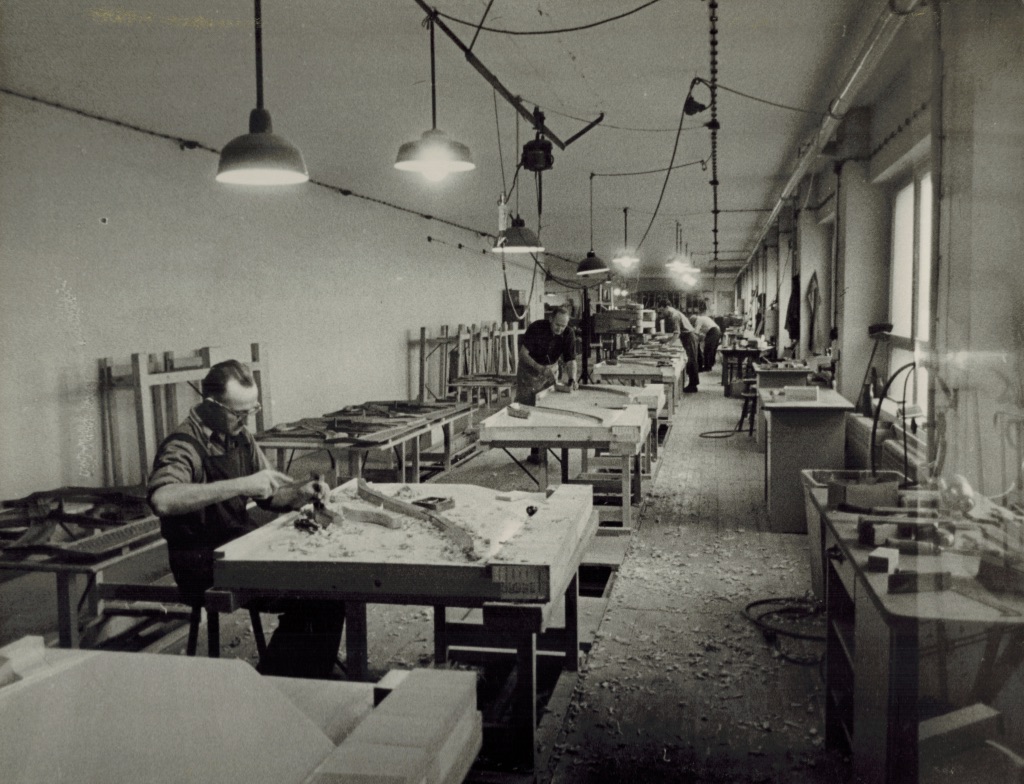
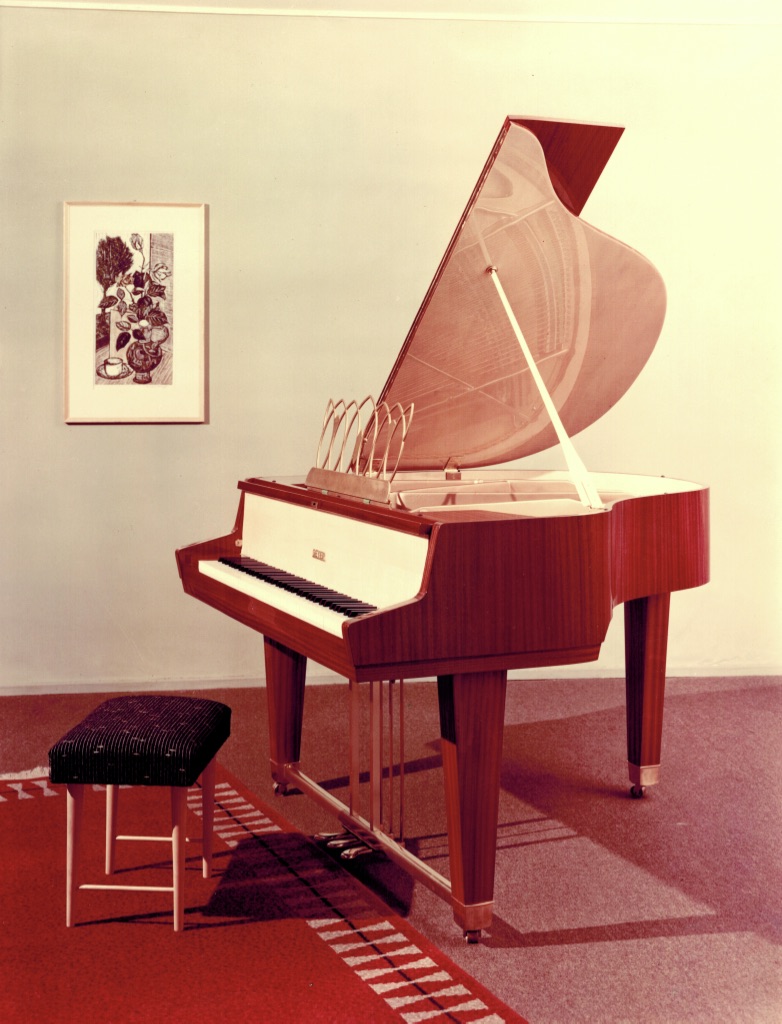
According to the entry in the commercial register A2/ S 121 No. 218, the company is run as a general partnership from 01.01.1921. The instruments, built according to the latest system, were characterized by their “extraordinary richness of sound” as well as the “particularly light and pleasant way of playing“. They were truly handcrafted products – the manufactured upright and grand pianos.

Already in 1925, Fuchs & Möhr pianos were awarded the “Golden State Medal” due to their excellent quality and favorable price. The number of buyers increased from year to year. According to the address book of 1928, the company Fuchs & Möhr was located at Jenaische Strafe 2a. At that time, the company employed about 20 people, of whom it is fair to say that they belonged to a tribe of long-time experienced professionals. The last pianos manufactured for Sweden were sunk in the Baltic Sea during the crossing in 1940.

As in other companies, Fuchs & Möhr had sales problems with pianos during the time of the 2nd World War. In the short term the production was changed and they shifted to the manufacture of soles for wooden slippers.

On 15.01.1952 the co-founder of the company, Mr. Gustav Robert Hermann Fuchs, passed away at the blessed age of 81.

His son, Hermann Fuchs, a master piano maker, took his place in the company.

The managing partner remains Walter Möhr (It. Commercial Register A / 35 164 No. 379).

The grand piano and piano factory ,,Fuchs & Möhr“ was founded on 01.01.1921 in Eisenberg (Thuringia). The founders and partners of this company are: Gustav Robert Hermann Fuchs, born 11.02.1871 (foreman in Friedrichstanneck) and Ernst Karl Walter Möhr, born 19.09.1897 (merchant in Eisenberg).

According to the entry in the commercial register A2/ S 121 No. 218, the company is run as a general partnership from 01.01.1921. The instruments, built according to the latest system, were characterized by their “extraordinary richness of sound” as well as the “particularly light and pleasant way of playing“. They were truly handcrafted products – the manufactured upright and grand pianos.

Already in 1925, Fuchs & Möhr pianos were awarded the “Golden State Medal” due to their excellent quality and favorable price. The number of buyers increased from year to year. According to the address book of 1928, the company Fuchs & Möhr was located at Jenaische Strafe 2a. At that time, the company employed about 20 people, of whom it is fair to say that they belonged to a tribe of long-time experienced professionals. The last pianos manufactured for Sweden were sunk in the Baltic Sea during the crossing in 1940.

As in other companies, Fuchs & Möhr had sales problems with pianos during the time of the 2nd World War. In the short term the production was changed and they shifted to the manufacture of soles for wooden slippers.

On 15.01.1952 the co-founder of the company, Mr. Gustav Robert Hermann Fuchs, passed away at the blessed age of 81.

His son, Hermann Fuchs, a master piano maker, took his place in the company.

The managing partner remains Walter Möhr (It. Commercial Register A / 35 164 No. 379).

With the fall of the Berlin Wall in 1989, a new era also began for the piano industry in Eisenberg. Whereas in GDR times, the aim was to manufacture instruments for the broad mass of the population, now other criteria are decisive.

On 01.01.1993 Mr. Helmut Altmeyer acquires the “Eisenberger Pianofortefabrik” from the Treuhand and leads the company with a completely new set up and new designed product line into the market. This includes the new name “Wilh- Steinberg AG”.

Since then, Wilh. Steinberg has continued the traditions that originated in the pianoforte factory founded by Adolph Geyer in 1877. But also representative for a number of companies like Weissbrod, Fuchs & Möhr, Finger and many others, which already gained world-wide reputation in their time and made Eisenberg known as a city of piano building far beyond its borders.

The Origin of Legendary German Piano

Drive up the Line 5 highway North-East past vast swaths of countryside from Frankfurt, and about 340km, or around 3 hours later, you will arrive at the tranquil and quiet district of Eisenberg.The small town with a population of 11,500 is the birthplace of the WILH. STEINBERG piano. Surrounding Eisenberg and stretching as far as the eye can see, are wide, fertile green vineyards. Each drop of the grape’s delicate nectar embodies the goodness and beauty that nature intended for the vineyards.Meissen ceramics is well known for its production of the finest ceramics used in the arts and crafts and captures the essence of European art culture at Dresden, where it is located. In the 19th century, great composer Wilhem Richard Wagner created several of his masterpieces while he was in Dresden.Eisenberg not only inherited the deep musical roots of European cultural history, but also brought together the traditional piano making techniques that would anoint Eisenberg as the birthplace of the WILH. STEINBERG piano.

Johann Wolfgang von Goethe and Eisenberg

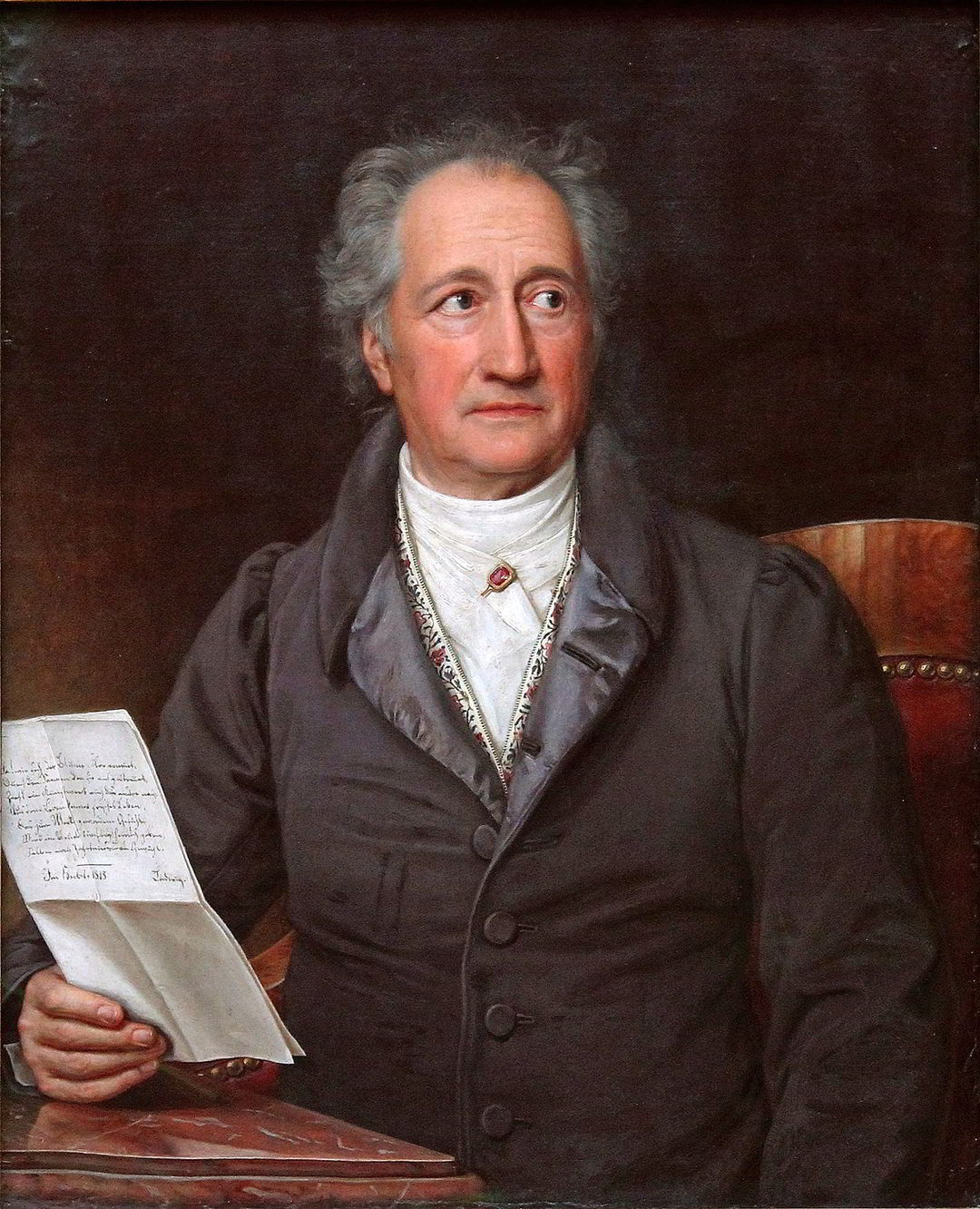
When referring to the history of WILH. STEINBERG pianos, it is impossible not to mention Johann Wolfgang von Goethe. It was the year 1775, when the Duke Carl-August von Sachsen-Weimar-Eisenach invited von Goethe to leave central Germany and move to Thüringia. This apparently innocent invitation would lay the foundations for the fundamental evolution of Eisenberg’s future. Johann Wolfgang von Goethe dedicated his life to the development of German musical culture. He and his family were instrumental to the blossoming of musical composition and the performing arts in the region. His work there later also influenced the development of piano making craftsmanship.

Key Elements for The Most Superlative Pianos

In the late 18th century, Eisenberg was a small town of workshops and craftsmen producing parts for various famous German piano manufacturers. But soon, these workshops evolved and started to develop their own, unique and superior techniques for piano making.Eisenberg’s proximity to the nearby Thüringia forest ensured an uninterrupted supply of the finest timber, an important fact that contributed to Eisenberg’s reputation.In 1877, WILH. STEINBERG pianos was founded at their family workshop during the height of the German piano making period.

135 years of Piano-making Experience & Tradition

Since its establishment during the height of Germany’s piano making days, WILH. STEINBERG has still managed to maintain its indisputable status. WILH. STEINBERG’s pianos embrace classic and elegant designs and produce the most impressive musical quality, guaranteeing it a place in history as one of the most successful piano makers. Over 135 years of piano making heritage has been built on the precious passing on of experience and expertise gained by generation after generation of master craftsmen. Craftsmen, who have toiled to harmonise modern piano making techniques with traditional ones to ensure that the musical perfection and production quality of WILH. STEINBERG pianos remains an ongoing legacy.

Inheriting the piano-making craftsmanship and tradition of 135 years

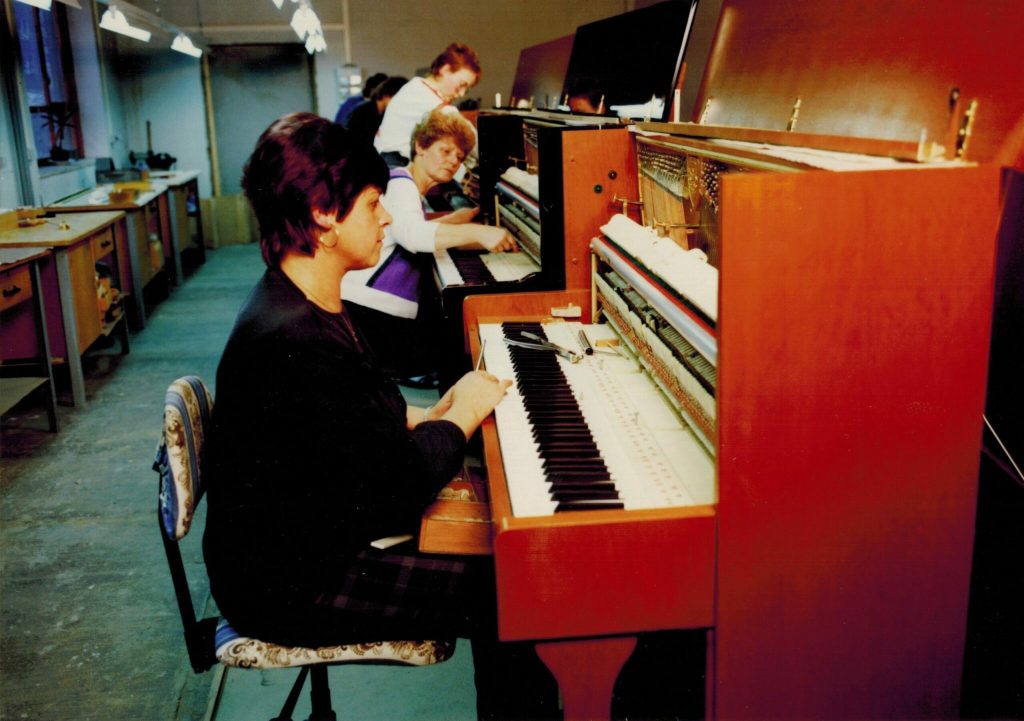
WILH. STEINBERG pianos are reputed in inheriting handcraft piano-making tradition. Combining modern technology, WILH. STEINBERG pianos have accomplished an outstanding success. Inheriting the legendary achievement has become one of the most important topic for WILH. STEINBERG.Eisenberg has already established its own piano-making experience over 135 years, which guarantees perfect German pianos for every customer with satisfaction by its reliable performance, outstanding touch and convenient care.WILH. STEINBERG pianos use soundboards that were originally made from spruce sourced from the Italian region of Val di Fiemme. Violins made by Stradivarius, another celebrated name in the world of musical instruments, also use the exceptional hardwood from the Val di Fiemme region.WILH. STEINBERG pianos are assembled from over 6,000 components, of which, 60% are made from wood. Before any piano leaves the factory, it has to go through a battery of tests and procedures, the most critical being the soundboard test.At present, WILH. STEINBERG pianos source their Alaskan spruce from the best suppliers in the world for their beautifuly balanced and wonderful soundboards. Pianos made during the early days of its 135 year history originally used individually numbered solidwood spruce from Italy’s Val di Fiemme district.Trees from the region can grow to 1,000m tall and posses tight growth rings, one of the most important contributing factors to the outstanding quality of WILH. STEINBERG pianos. It was understood that, like WILH. STEINBERG pianos, the Stradivarius violins were also made from wood sourced from this region. The unique characteristics of the wood imbued the finished instruments with an exhilarating sound quality and intense tonal properties that would attract global acclaim

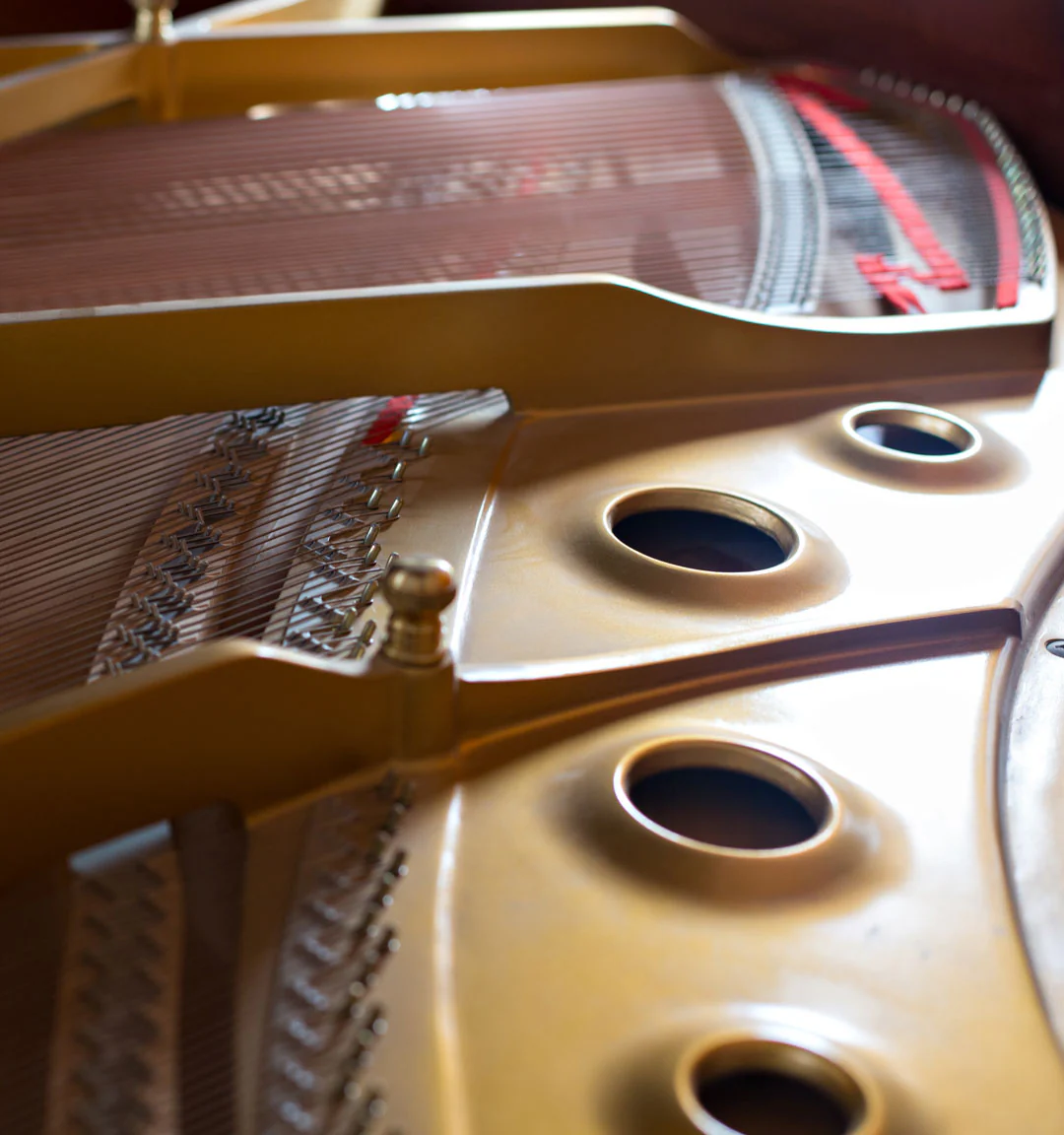
WILH. STEINBERG piano’s soundboard

WILH. STEINBERG piano’s soundboard is the benchmark of rich tone and extraordinary qualityTrees from the Val di Fiemme region often grew to over 1,000m and has remarkably tight growth rings. This rare phenomenon is specific to this type of hardwood and is key to bestowing soundboards made from it with an unusually long-lasting sound quality.This hardwood was greatly sought after by the world’s instrument makers. As WILH. STEINBERG was already enjoying a strong relationship with local soundboard maker, Ciresa, it continued to enjoy a steady and reliable supply.

Awards

The annual Music World event in Paris, France, gathers over 300 world renowned piano makers from across Germany and Europe, Asia and America.Since 1944, WILH. STEINBERG pianos have been recognised with the CHOC award on three occasions. Having won the hearts of many performers with its legendary sound quality and history, it is no surprise that it would be a repeat winner.

WILH. STEINBERG is Part of the Parsons Music Group

Founded in 1986, Parsons Music Corporation is one of the leading and most respected multinational music companies. We have our own musical instrument production line, a strong retail network and well-established music centers for training musical talents.

The Group is now one of the three largest piano manufacturers in the world and China’s leading retailer of musical instruments.

Parsons Music Group’s mission is to internationalize and develop the music and art industry.